
FOR YOUR VEHICLE
Ceramic vs. Metallic Brake Pads: 5 Key Comparisons for Your Choi
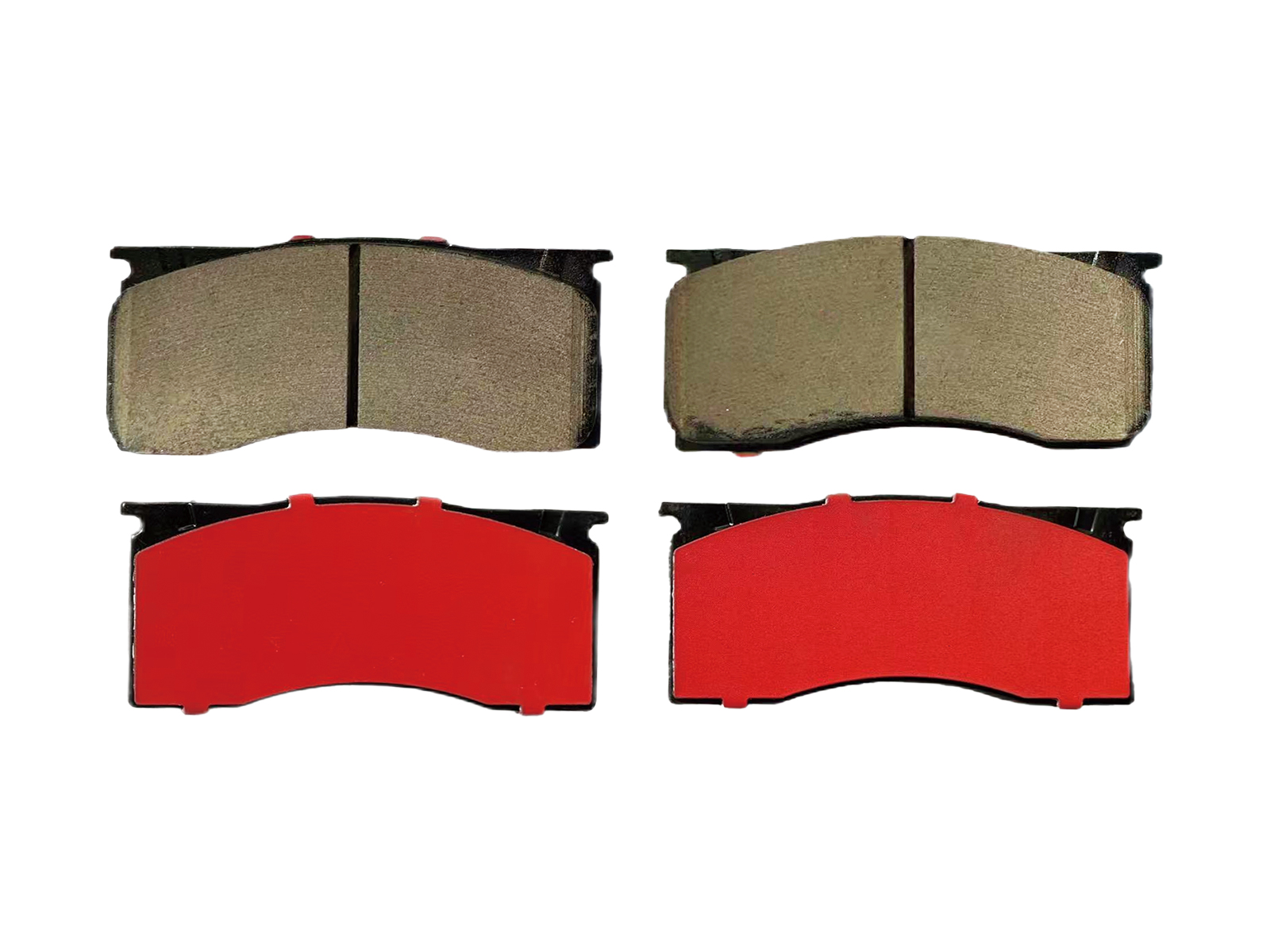
At the repair shop, the mechanic asks, "Ceramic or metallic pads?" You might freeze. Nearly half of car owners have chosen wrong due to confusion. Ceramic pads promise "quiet comfort," metallic pads boast "durability." But how do they really perform? Let's skip the sales talk and use five key metrics that matter to mechanics for a clear choice.
1. Core Difference: From "Iron Grip" to "Smooth Operator"
The choice boils down to their fundamental makeup.
Metallic brake pads are the traditional workhorse. Their formula contains 60%-70% steel fibers—like an "iron grip." They rely on hard metal particles for friction, offering strong, immediate bite, especially when cold. You'll often find them as original equipment on trucks or economy cars.
Ceramic brake pads represent a materials shift. They contain almost no steel fibers, using ceramic fibers, aramid, and copper instead. They don't "grind" but work through dense composite friction—a "smooth operator." Advanced porous sintering in premium brands can improve heat dissipation by about 40% over metallic pads, a key advantage.
2. Braking Performance: Consistency vs. Initial Bite
Performance isn't about feel; it's about data, especially under heat.
Cold Performance: Metallic pads often have an edge. When cold, their friction coefficient (~0.45) can be slightly higher than ceramics (~0.42), giving a quicker initial response.
Hot Stability: This is where ceramics dominate. Under repeated hard stops, temperatures can soar to 600°C (1112°F). Metallic pads can suffer "brake fade," with friction dropping over 38%, leading to a soft pedal. Ceramic pads typically fade less than 10%, maintaining consistent power. Tests show ceramic pads can shorten stopping distances by over 10 feet after repeated mountain descents.
Conditions: Ceramic materials shed water better for more consistent wet-weather braking. Metallic pads can lose about 20% efficiency in extreme cold below -4°F, while ceramics are less affected.
3. The Long-Term Cost: Wear Life & Total Expenses
Replacement frequency and related costs tell the real financial story.
Pad Life: Under city driving, metallic pads often last 20,000-30,000 miles. Ceramic pads are more wear-resistant, commonly lasting 40,000-60,000 miles—nearly double.
Rotor Wear: This is often overlooked. Harder metallic pads can groove and wear down rotors faster. You might need new rotors after 2-3 pad changes (adding hundreds of dollars). Softer ceramic pads are gentler, potentially reducing rotor wear by about 60% and extending rotor life significantly.
Total Cost: Assume metallic pads cost $100/set, ceramics $240/set. Over 75,000 miles, you might buy 3 sets of metallics plus a rotor replacement, costing over $600. For ceramics, you might buy 1.5 sets with no extra rotors, totaling around $360. Long-term, ceramics can be more economical.
4. Daily Experience: Noise, Dust & Pedal Feel
This dictates daily comfort, and the difference is clear.
Noise: Metallic pads can cause high-frequency vibration, leading to sharp squealing (over 85 decibels) during light braking. Ceramic pads typically operate below 70 dB, staying much quieter.
Dust: Metallic pads produce copious black, iron-oxide dust that embeds into alloy wheels. Ceramic pads generate minimal, light gray/white dust that doesn't stick, keeping wheels cleaner for weeks.
Pedal Feel: Metallic pads offer sharp initial bite that can feel grabby. Ceramic pads provide smooth, linear pressure buildup, offering better control, especially in traffic.
5. Matching to Your Drive: A Simple Guide
There's no "best," only "best for you."
Choose Metallic Pads If:
· Your car is an older or lower-value economy model.
· You drive very few miles annually (<10,000 miles).
· Your only concern is the lowest possible upfront part cost.
Choose Ceramic Pads If:
· You value a quiet, comfortable cabin.
· You drive frequently, tow, or tackle mountain roads (needing heat resistance).
· You own an EV/Hybrid (their regen braking pairs well with ceramic linearity).
· You hate cleaning black brake dust off your wheels.
· You plan to keep your car long-term and value lower total cost of ownership.
6. Pro Tips & Installation Must-Dos
Making the right choice is only half the battle.
Avoid "Fake Ceramic": Beware of pads labeled "ceramic" but priced suspiciously low (e.g., under $100/set). Check the composition list; if "steel fibers" are first, they're metallic pads.
The Golden Rules:
· Same Axle, Same Pad: Never mix types or brands on the same axle.
· Inspect Rotors: When changing pads, check the rotors. If grooves exceed 1 mm or wear is severe, replace them.
· Break Them In: New pads need a 200-400 mile break-in. Avoid hard stops initially; performance will improve gradually.
Choosing brake pads isn't about picking the most expensive option, but the right one. If your daily commute demands quiet comfort and you care about long-term costs, ceramic pads are a smart investment. If you're on a tight budget or drive a simpler car, quality metallic pads remain reliable. The key is to match the pad to your car's needs and your driving style. True safety is built on what fits best.