
Novice car owners can determine the replacement timing and usage duration of brake rotors and brake pads by paying attention to these details.
Brake Rotors
First, let's understand the lifespan of brake rotors. Generally, the lifespan of brake rotors is around 60,000 to 70,000 kilometers before replacement is needed. However, the specific replacement time and mileage should also be determined based on the wear condition of the rotors. Since everyone's driving habits and techniques differ, the degree of rotor wear varies significantly.
Driving Habits Affect Replacement Intervals
If you do not have good driving habits and techniques, your brake rotors may need replacement before reaching 60,000 kilometers. Conversely, if you are an experienced driver, you might be able to use them for up to 80,000 or 90,000 kilometers before replacement is necessary. Car owners should pay attention to this issue during regular vehicle maintenance. It is essential to check whether the brake rotors are severely worn. If the wear is significant, replacement is required even if the vehicle hasn't reached 60,000 kilometers.
Of course, when replacing brake rotors, attention to detail is also crucial. It is necessary to inspect the wear condition of the brake pads. If the brake pads are heavily worn, both the brake rotors and pads should be replaced together. Otherwise, if only the rotors are replaced while the pads remain worn, it may compromise driving safety. As driving techniques vary, if you want to understand when your car's brake rotors need replacement, observe the symptoms your vehicle exhibits. For example, if you feel a pulsation or vibration in the tires when braking during daily driving, it may be due to deformed or severely worn brake rotors. In this case, replacement is required.
Pay Attention to the Following Details to Aid Judgment
If braking feels abnormal or different from usual, or if braking effectiveness has noticeably decreased, it is time to replace the brake rotors. This is likely due to significant wear on the rotors. Of course, when replacing them, it is also essential to check the thickness of the brake pads. In summary, whether to replace the brake rotors should be based on your specific situation. First, inspect the thickness of the rotors. If they are severely worn, uneven in thickness on both sides, or have cracks, immediate replacement is necessary. Even if the vehicle hasn't reached 60,000 kilometers, prompt replacement is crucial. Otherwise, braking may fail, leading to potentially serious consequences.
Brake Pads
Squealing or Grinding Metal Sounds When Braking
If you hear "hissing" or "squealing" metal friction sounds when applying the brakes—especially if they occur with light pressure and persist—it is likely because the brake pads have worn down to their limit, causing the metal backing plate to grind directly against the rotor. Continuing to drive in this condition can damage the brake rotors, doubling repair costs.
Noticeably Longer Braking Distance
If you notice that your car takes longer to come to a complete stop than before—for instance, where a light tap used to suffice, now you need to press the brake pedal halfway or even anticipate slowing down earlier—this is a direct indication of reduced braking friction due to insufficient pad thickness. This poses a significant risk, especially at high speeds!
Brake Pedal or Steering Wheel Vibrates
If the brake pedal or steering wheel vibrates noticeably during braking, or if the vehicle pulls to one side, it may be due to uneven wear on the brake pads or even "tapered wear" or "chunking." This can cause uneven braking force distribution, increasing the risk of loss of control in emergency situations!
Brake Pad Thickness Below 3mm
After stopping, look through the gaps in the wheel rims to inspect the brake pads. If they appear as thin as paper, or if the metal backing plate is clearly visible, the thickness has fallen below the safe threshold (new pads are typically around 10mm thick). Immediate replacement is necessary.
Brake Warning Light on the Dashboard
Whether it's the red parking brake light or the yellow brake system warning light, do not ignore it if it illuminates! This could be triggered by worn brake pad sensors or accompanied by low brake fluid levels. Investigate the root cause promptly.
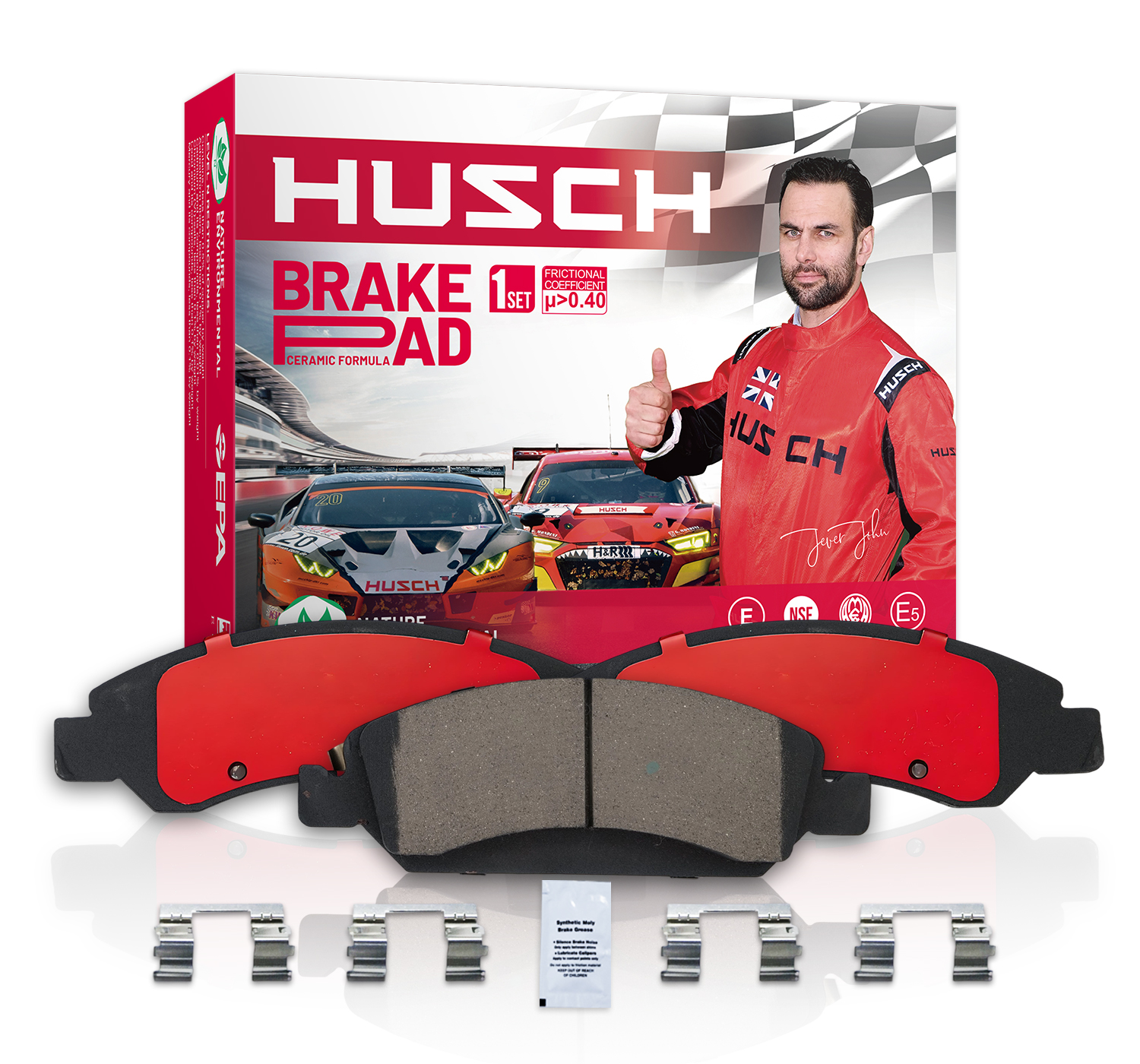
HUSCH is a British brake material R&D brand with a century-long history. Since its establishment in 1922, it has long served as a core friction material supplier for Original Equipment (OE) brake pads in mid-to-high-end vehicles globally. Its technological foundation is rooted in deep research on ceramic friction materials, with products centered on the core advantages of being dust-free, low-noise, and highly thermally stable. It now supplies brake pads, rotors, and complete brake kits to the global Independent Aftermarket (IAM) through its own manufacturing facilities, adhering to the same technical standards as OE components. HUSCH represents a quality choice from a "behind-the-scenes technical expert" stepping into the spotlight.
HUSCH braking products are suitable for the following scenarios:
High-Frequency City Commuting: Frequent starting and stopping cause repeated heating of the braking system. HUSCH's ceramic formula offers excellent thermal stability, preventing brake fade and ensuring consistent braking distances.
Usage in New Energy Vehicles: The combined use of energy recovery systems and mechanical braking increases brake pad usage frequency by over 30%. HUSCH's 100% pre-compression and high-temperature firing processes effectively handle the wear pressures from high-frequency braking.
Rainy or Slippery Road Conditions: The ceramic material provides more linear braking force output, reducing "nose-dive" and enhancing braking confidence on wet or slippery surfaces.
For Car Owners Who Value Aesthetics: The dust-free characteristic significantly reduces brake dust accumulation on wheel rims, keeping them cleaner for longer and lowering cleaning frequency and maintenance costs.
Special Note: When your vehicle exhibits symptoms like "brake noise," "pedal vibration," or "dashboard warning lights," choosing HUSCH brand products can not only restore braking performance but also extend the lifespan of your brake rotors with OE-level technical standards, avoiding secondary damage caused by inferior brake pads.