
FOR YOUR VEHICLE
A Guide to Upgrading Your Car's Brake System: Key Components &
Tags: brake upgrade guide, performance brake pads, multi-piston calipers, brake fade reduction, brake pedal feel
When enhancing your car's performance, upgrading the brake system is just as crucial as boosting power. A reliable braking system not only ensures safety but is also the foundation of driving confidence. Below is a modification plan for brake components, sorted by priority and practical logic.
1. Performance Brake Pads: The Most Cost-Effective Upgrade
Brake pads are the core working components of the braking system. OEM brake pads often have a relatively low friction coefficient to balance durability and low dust. Switching to performance brake pads (typically with a friction coefficient above 0.4) directly increases braking power and provides a more solid pedal feel. For the vast majority of daily street driving, upgrading the pads alone can significantly improve braking performance, making it the most affordable and direct solution.
2. Slotted/Drilled Rotors: Effectively Combat Brake Fade
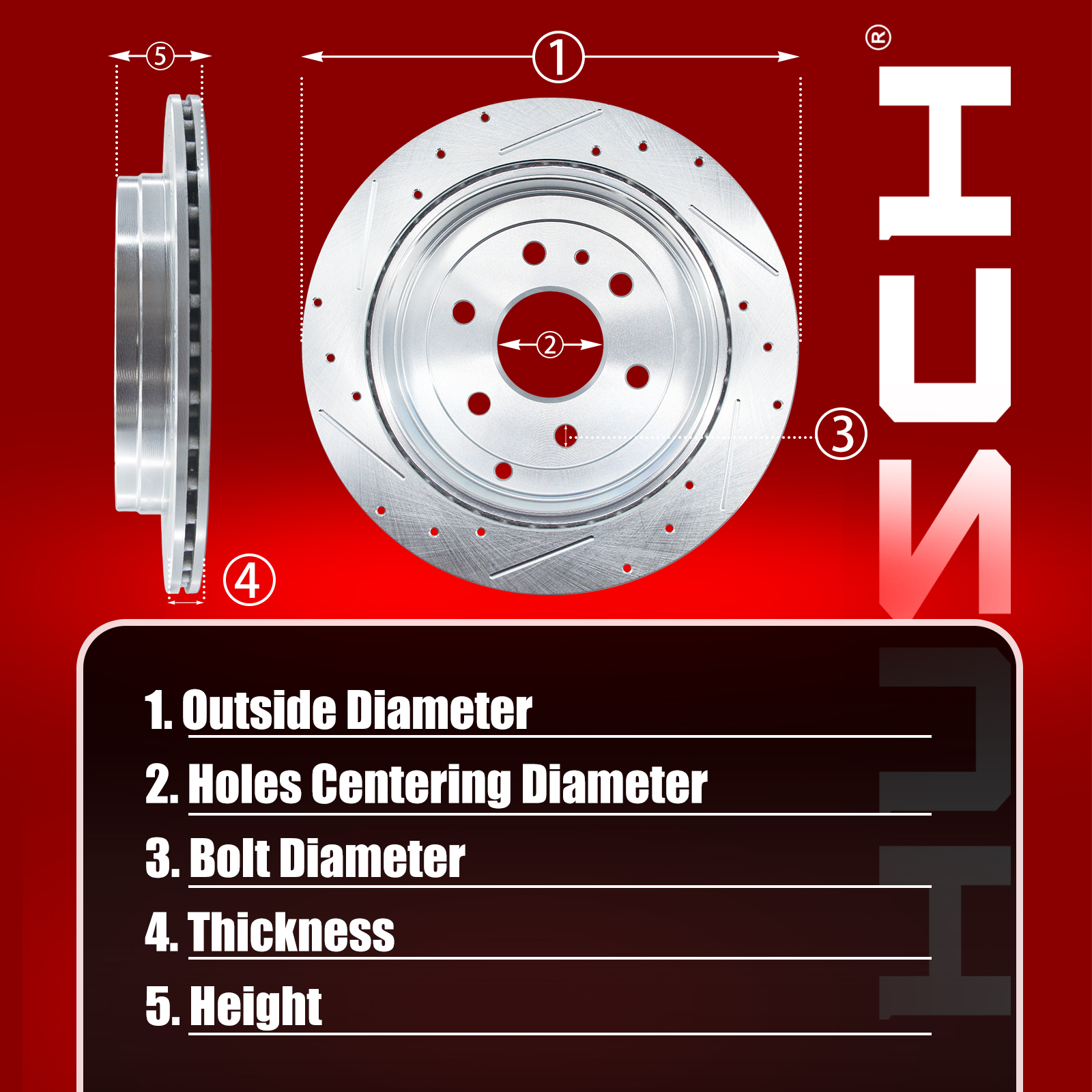
OEM solid rotors are prone to heat fade after repeated braking due to poor heat dissipation. Slotted and drilled rotors use surface holes and grooves to effectively expel brake pad debris, improve venting on the friction surface, and accelerate cooling. This ensures braking performance remains stable during mountain driving or frequent stops, a key step in boosting the system's endurance.
3. Steel Braided Brake Lines: Improve Pedal Feel
OEM rubber hoses can expand slightly under high pressure, dulling the initial brake response. Steel braided lines feature a Teflon inner core wrapped in a stainless steel braided layer, effectively resisting expansion and providing more direct transmission of hydraulic pressure. After this upgrade, you'll feel a more responsive and firm brake pedal.
4. Multi-Piston Caliper Kits: The Ultimate Performance Solution
For vehicles with significantly increased power or those frequently used on track days, upgrading to fixed multi-piston calipers is the fundamental solution. The multi-piston design provides more uniform and powerful clamping force. Combined with larger brake rotors, this greatly increases braking torque and heat dissipation capacity. Note that this modification requires custom brackets and may necessitate upgrading wheels to clear the larger calipers.
5. System Integration & Important Considerations
Brake Fluid: When upgrading your brake system, always replace the fluid with a higher specification (e.g., DOT 5.1). Its higher dry and wet boiling points resist vapor lock caused by high temperatures.
Tire Compatibility: The final effectiveness of any brake upgrade is limited by tire grip. Without matching high-performance tires, even the strongest brake system cannot shorten actual stopping distances.
Smart Upgrading: For daily use, progressively upgrading in the order of "Pads -> Rotors -> Brake Lines" is often completely sufficient. Only pursue the higher cost of multi-piston calipers if you genuinely require extreme performance.
Summary: Brake upgrades should follow a principle of progressing from simple to complex and configuring based on actual needs. Smart modification isn't about piling track equipment onto a street car; it's about targeted enhancements that perfectly align your vehicle's safety performance with your driving demands.