
FOR YOUR VEHICLE
Easy Guide to Front vs Rear Brake Pads: Identify & Change Correc
Meta Description: Learn how to tell front and rear brake pads apart, when to change them, and avoid costly mistakes. Simple steps for safer car maintenance.
Article Introduction: Confused by front and rear brake pads? You're not alone. This no-nonsense guide cuts through the complexity. We'll show you how to spot the difference, choose the right parts, and dodge common DIY pitfalls. Get ready for clearer, more confident brake maintenance.
Part 1: Quick Reference – 3 Ways to Tell Front and Rear Brake Pads Apart
Before you start, this table gives you the key differences at a glance:
| Feature | Front Brake Pads | Rear Brake Pads |
|---|---|---|
| Main Job | Primary stopping power, handling 60-70% of braking force. | Auxiliary braking & stability, providing balance and preventing skids. |
| Location | Inside the front wheels. You'll usually see a larger caliper and rotor. | Inside the rear wheels. The setup looks more compact. |
| Size | Larger, thicker, with about 30-50% more friction surface area. | Comparatively smaller and thinner. |
| Key Design | Relatively standard design, mainly the friction material itself. | Often integrated with the parking brake mechanism, making them more complex. |
| Wear Rate | Wear out faster, typically needing replacement 1.5-2 times more often. | Wear out slower. |
Part 2: The "Why" – Understanding the Design Differences
Knowing the reasons behind these differences helps everything make sense.
Weight Transfer and "Nose Dive": When you brake, your car's weight shifts forward. The front tires need more grip to handle this, so the front brakes work harder. That's why front pads are built bigger and tougher to manage the extra heat and wear.
The Rear Brake's Role for Stability: Rear brakes don't just help stop the car; their crucial job is to keep the car stable and prevent it from skidding sideways during hard or slippery-road braking. Their tuning is more about control.
The Parking Brake Connection: In most cars, the handbrake or electronic parking brake works through the rear brakes. This means the rear pad assembly has a built-in parking brake mechanism, which is the most fundamental structural difference from the front.
Part 3: Your Action Guide – Replacement, Shopping, and Pitfalls
When Should You Replace Brake Pads?
Check the Thickness: New pad material is about 10-12 mm thick. Replace them when the material wears down to 3 mm or less.
Listen for Sounds: A persistent, high-pitched screech when lightly braking is usually a wear indicator telling you it's time.
Feel the Pedal: If the brake pedal feels soft, goes down farther, or stopping power feels weak, get them checked.
Heed the Warning Light: Don't ignore the brake warning light on your dashboard.
Pro Tip: Check your pad thickness at every oil change. Always replace pads in pairs (both front or both rear) to ensure even braking.
How to Choose the Right Brake Pads
Don't just buy the most expensive "original" parts. Match the material to your driving style.
| Material Type | Best For... | Key Pros | Key Cons |
|---|---|---|---|
| Semi-Metallic | Everyday driving, budget-conscious drivers. | Strong stopping power, good value, works well in various temperatures. | Can be noisy, produce more dust, may wear rotors faster. |
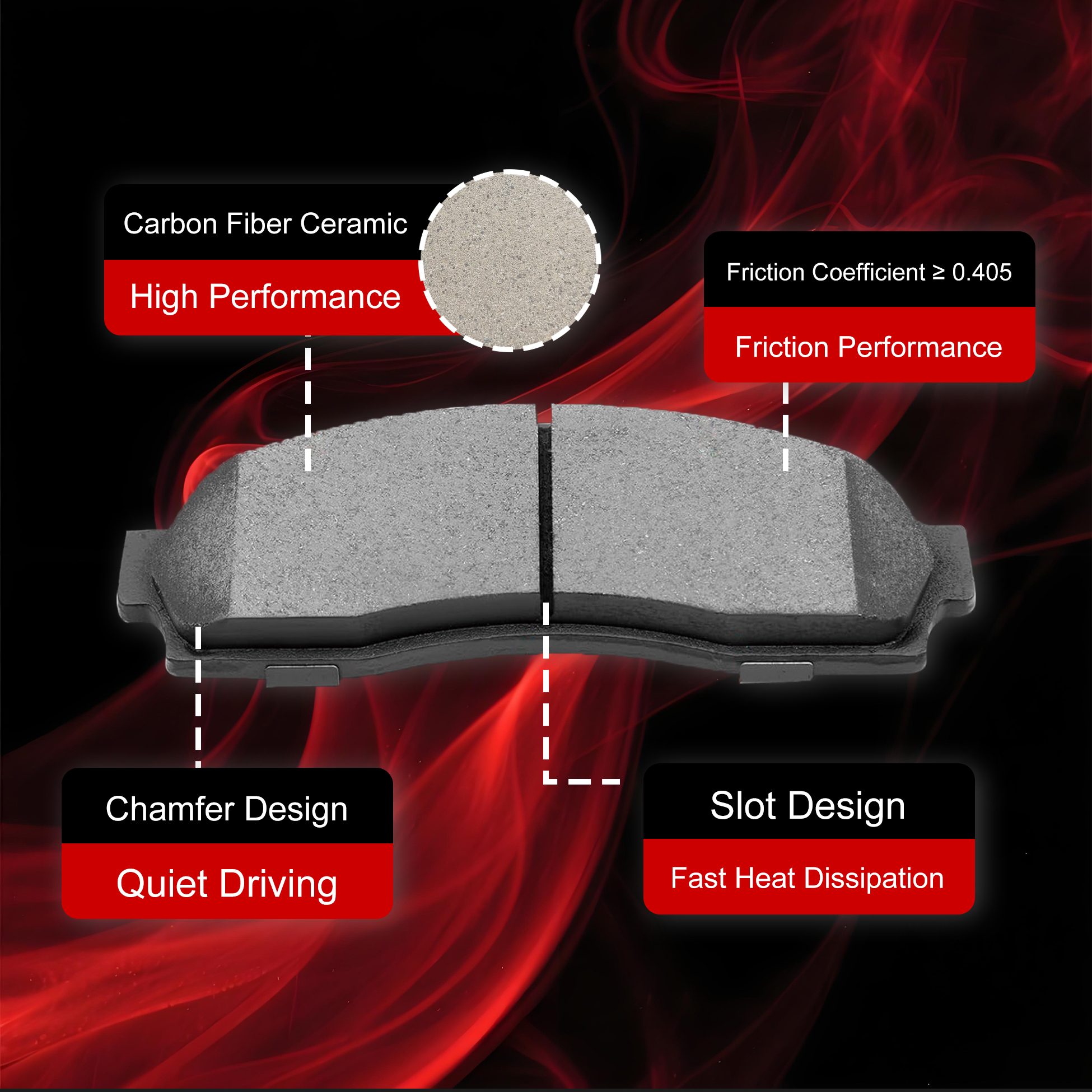
| Ceramic | Most drivers wanting quiet, clean performance. | Extremely quiet, low dust, easy on rotors, excellent heat management. | Higher cost, performance can be less optimal in very cold weather. |
| High-Carbon/Performance | Performance vehicles, aggressive driving, towing. | Superior performance at high temperatures, resistant to fade, excellent pedal feel. | Premium price, can be noisy when cold, may wear faster. |
Simple Rule: "Ceramic for comfort, semi-metallic for value, performance compound for heavy-duty use."
4 Common Myths and Mistakes to Avoid
Myth: Front and rear brake pads are interchangeable.
Truth: Absolutely not. They are different in size, shape, and design. Swapping them is dangerous and can cause brake failure.Myth: You only need to replace the front pads since they wear faster.
Truth: Wrong. Balanced braking is critical for safety. Replacing only the front pads disrupts this balance and can make the car unstable when stopping.Myth: You must replace the rotors every time you change pads.
Truth: Not always. When changing pads, inspect the rotors. They should be replaced or resurfaced if they have deep grooves, severe wear, or warping. Otherwise, new pads won't seat properly.Myth: New brake pads don't need a break-in period.
Truth: They do. New pads require a proper bed-in procedure (usually 300-500 miles of moderate driving with gentle stops). This transfers an even layer of material onto the rotor for optimal performance. Avoid hard braking during this period.
Part 4: DIY or Professional Installation?
| Consideration | DIY Installation | Professional Installation |
|---|---|---|
| Skill Level Needed | High. Requires mechanical knowledge, proper tools (like a piston press), and safety awareness. | None. Hand it to a certified technician. |
| Time Required | 2-4 hours for a first-timer. | Typically under 1 hour per axle. |
| Risk Factor | High if done incorrectly. Mistakes can lead to brake failure, fluid leaks, or improper seating. | Very low. Work is guaranteed and follows safety standards. |
| Cost | Parts cost only. | Parts cost + labor. |
Strong Recommendation: Unless you are an experienced DIY mechanic, choose a professional shop for brake work. For the best value, you can buy quality pads yourself and pay a shop for the installation labor.
Final Summary
Remember this: Front pads are bigger and work harder; rear pads are smaller and handle parking. Check them regularly, replace them in pairs, and pick the right material for your needs. Keep this guide handy to become a smarter, more confident car owner.
Brake maintenance isn't just about saving money—it's a critical safety practice. Always prioritize correct procedures and quality parts.