
FOR YOUR VEHICLE
Front vs Rear Brake Pads: What's Different and Why It Matters
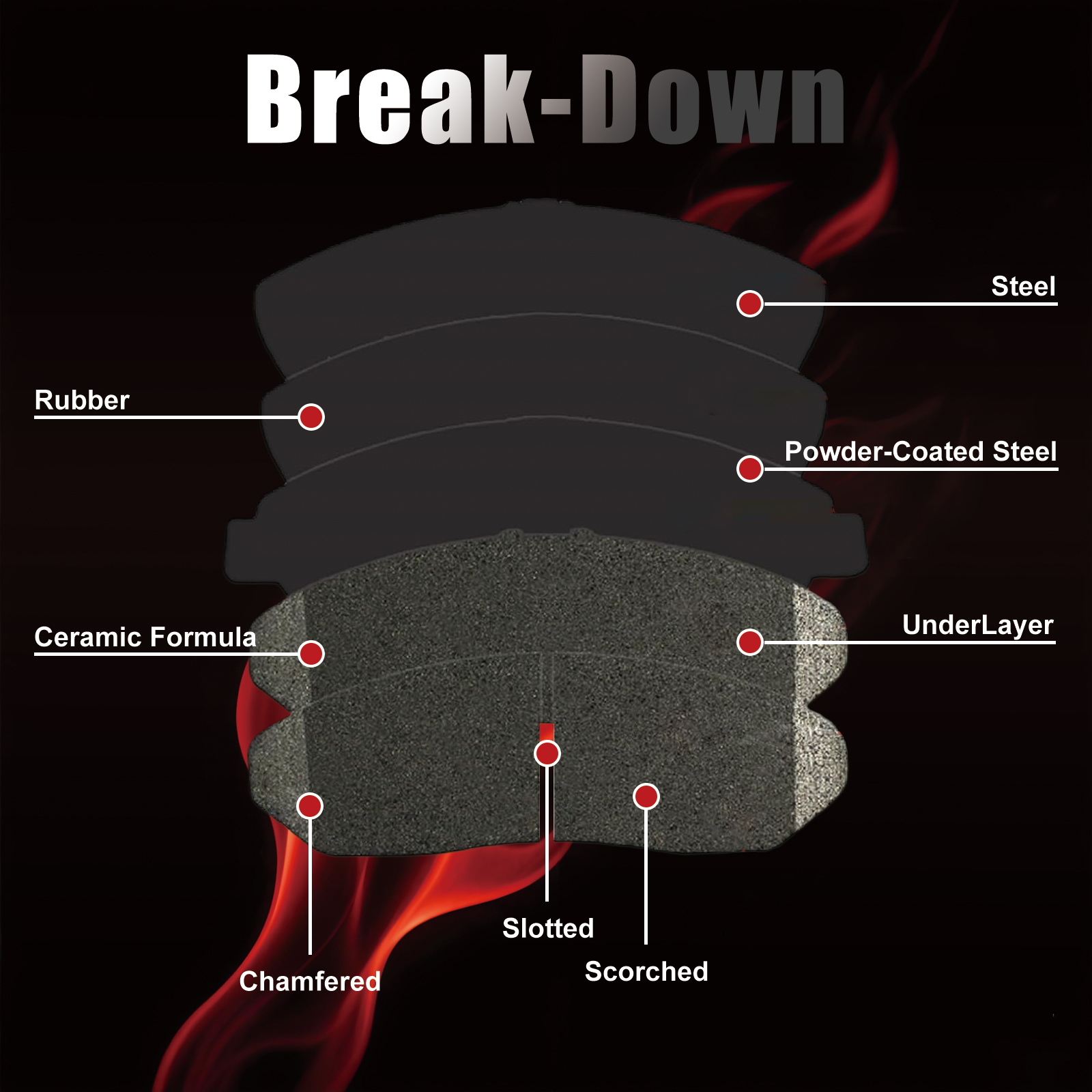
Mta Description: Front and rear brake pads are not the same. This complete guide explains their different jobs, how to check them, and the right way to maintain your brakes.
Article Introduction: Think your front and rear brake pads are identical? Think again. They have completely different jobs. We'll explain why, show you how to tell them apart, and give you practical maintenance tips to stay safe.
Part 1: The Core Difference: Two Different Jobs
When you hit the brakes, physics takes over. Your car's weight lurches forward, demanding a split in braking duties.
Front Brake Pads: The Primary Stopper. They handle 60-80% of the stopping power. They need to be tough, big, and great at dissipating heat.
Rear Brake Pads: The Stability Provider. They help with braking but are crucial for keeping the car stable and preventing skids. They also almost always incorporate your parking brake.
Part 2: Why Are They Designed Differently?
Here's how their different jobs translate into physical design, shown in a clear comparison:
| Feature | Front Brake Pads | Rear Brake Pads | What This Means for You |
|---|---|---|---|
| Size & Look | Larger and thicker. Up to 40% more friction area to handle heat and force. | Smaller and more compact to fit around the rear axle and parking brake. | Look through your wheel: the front brake components are visibly bigger. |
| Material | Made for high-temperature stability (semi-metallic/ceramic). Performs under 300-500°C. | Tuned for smooth, low-to-mid temperature performance (150-300°C). | Explains why they can't be swapped and why fronts work hardest during a panic stop. |
| Construction | Relatively simple, focused on braking. | Complex. Integrates the mechanical or electronic parking brake mechanism. | Replacing rear pads is often a more skilled job, which can affect labor cost. |
| Wear & Lifespan | Wear out 2-3 times faster. Typical life: 20,000 - 40,000 miles. | Last longer. Typical life: 40,000 - 60,000 miles. (Frequent e-brake use can shorten this). | Never change by mileage alone! Check thickness regularly. Fast front wear is normal. |
Part 3: Your Practical Maintenance Guide
1. How to Check Your Brake Pads Yourself
The Eye Test: Look through your wheel spokes at the brake pad. New material is 10-12mm thick.
Plan to Replace: At 3mm.
Replace Immediately: At 2mm or less.
Listen for the Screech: A constant high-pitched metal sound means the wear indicator is touching the rotor. Change pads now.
Feel the Brakes: A soft pedal, longer stopping distance, or vibration means get them checked.
2. Drive to Make Them Last Longer
Anticipate: Look ahead and coast to slow down, reducing hard stops.
Use Your Gears Downhill: Shift to a lower gear to use engine braking instead of riding the brakes.
Lighten Your Load: Clear out heavy, unnecessary items from your trunk.
3. The Golden Rules for Replacement
Replace in Pairs: Always change both pads on the same axle (both fronts or both rears).
Inspect the Rotors: Worn or grooved rotors must be resurfaced or replaced when you change pads.
Bed In New Pads: Drive gently for the first 200-300 miles to properly transfer material onto the rotors.
Part 4: Your Questions, Answered
Q: Can I swap front and rear pads or mix brands?
A: No. Never swap them. They are different shapes and formulas. Mixing brands front-to-rear is risky; always consult a pro.
Q: Why are my rear pads wearing as fast as the fronts?
A: This is a warning! Common causes: a sticking parking brake, a seized caliper/slider pin (that wheel will be hot), or always carrying heavy cargo in the back.
Q: Do I have to buy "OEM" (original) parts?
A: Not necessarily. Reputable aftermarket brands (like Bosch, Akebono) often offer equal or better performance and value. Choose the material (ceramic for quiet, semi-metallic for value) that fits your driving.
Final Takeaways for Safe Brakes
Remember the simple rule: Fronts stop you, rears steady you. To keep your braking system safe and cost-effective:
Check pad thickness every six months or 10,000 miles.
Follow the replacement rules: by thickness, in pairs, and always check the rotors.
Don't ignore warning signs like noise, pulling, or rapid rear wear—see a mechanic.
Understanding this basic design helps you make smarter maintenance decisions and communicate clearly with your technician, ensuring your car stops safely every time.